Hot Flashes and Night Sweats in Nashville: Causes and Treatment in Perimenopause and Menopause
Hot flashes and night sweats are among the most common, disruptive symptoms of menopause and perimenopause, affecting 75% of women. These sudden waves of heating, flushing and sweating can occur during the day, or wake you at night from sleep. The good news is that effective treatments exist- from menopausal hormone therapy to newer non-hormonal treatments. Understanding hot flashes is the first step toward controlling them and feeling like yourself again.
Hot flashes are caused by changes in the brain’s temperature regulation during menopause and can be effectively treated with hormone therapy, non-hormonal medications, and lifestyle changes.
By Leigh Anne Hulva, BSN, RN- Women’s Health Educator
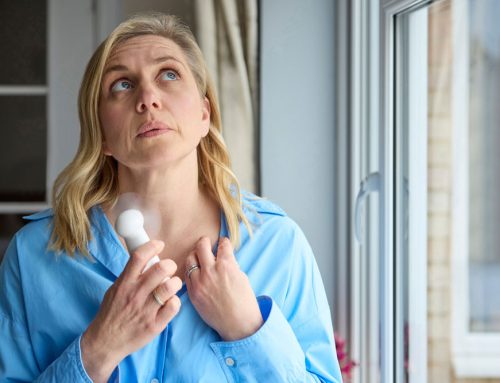
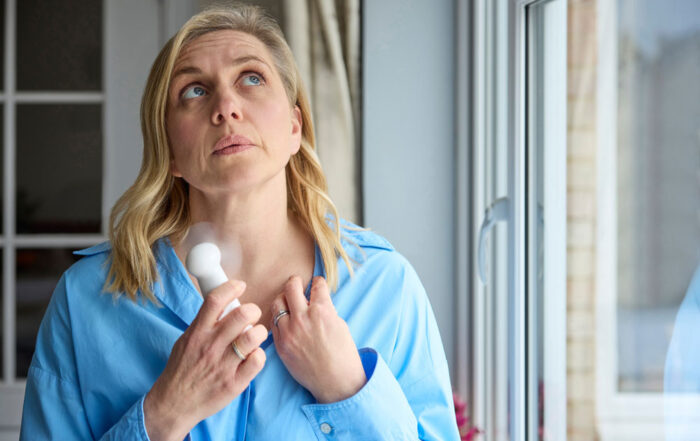
If you’ve ever been sitting quietly- in a meeting, at dinner, drifting toward sleep- when a wave of heat hits you, flooding your face and chest without warning, you know that a hot flash is not a subtle experience.
Hot flashes and night sweats- referred to as vasomotor symptoms or VMS- are among the most common symptoms of perimenopause and menopause. Roughly 75% of women will experience them during this time of transition. They’re also, reassuringly, among the most treatable symptoms. Let’s discuss what’s actually happening in your body, why it’s worse at night for so many women, and what you can do about it.
What Causes Hot Flashes during Menopause and Perimenopause
The brain’s internal thermostat is located in a region of the hypothalamus called the thermoregulatory center. During the hormonal fluctuations of the menopause transition, this center becomes hypersensitive. Normally, your body can tolerate a range of internal temperatures with relative comfort, and without triggering a response in the hypothalamus. But during the menopause transition, that comfort range narrows significantly.
Even a small rise in core body temperature- one that might have been ignored entirely by your body five years ago- can trigger a dramatic emergency cooling response. Blood vessels near the surface of the skin dilate, blood rushes to the surface in a visible flush, and you sweat (sometimes copiously). This is what you’re feeling during a hot flash: that sudden, intense wave of heat.
The main culprit is declining estrogen. Of course, during perimenopause, your hormones aren’t declining in any predictable pattern. They’re erratic, with peaks and valleys from day to day and hour to hour. This makes it especially hard for your brain to keep up. Estrogen plays a role in regulating the hypothalamus, and as its levels shift unpredictably, the thermoregulatory system becomes destabilized.
Research from Harvard Medical School and other leading institutions has helped us more thoroughly understand the physiology involved in hot flashes. In particular, the neuropeptide neurokinin B is being studied. This has led to the development of newer non-hormonal treatments.
Hot flashes can range from mild and short-lasting to severe, complete with heart palpitations and anxiety. Some women experience them only once in a while, and others find themselves struggling with them several times per hour. Whatever your personal experience, rest assured, there are treatments available.
Why Hot Flashes are Worse at Night (Night Sweats Explained)
Night sweats are essentially hot flashes that occur during sleep. They tend to feel more intense for several reasons. Your body temperature naturally drops as part of the sleep cycle. This, paradoxically, can trigger the thermoregulatory system in a woman whose hormonal balance is already disrupted. Add the warmth of bedding or a sleeping partner, and the conditions are ripe for a significant episode.
When a night sweat awakens you, it’s generally after your body has been through a full hot flash response. This is why you often wake up to damp clothes or even drenched sheets. You’ve already gone through the hot flash and its subsequent sweating and cooling, so by this point, you might feel chilled.
Over time, this kind of fragmented sleep can really take a toll on your emotional and cognitive well-being. Genuine sleep deprivation affects mood, memory, immune function, metabolism, and your ability to simply feel like yourself during the day.
It’s worth taking a moment to recognize this problem for what it is. The exhaustion many perimenopausal and menopausal women experience isn’t weakness or “just stress.” It’s the predictable response to night after night of broken sleep. You’re not imagining it, and you don’t simply have to endure it.
How Long Do Hot Flashes Last in Menopause?
This is one of the questions I hear most often, and I wish the answer were more straightforward. The duration- like the severity- of vasomotor symptoms varies from woman to woman. For some, they resolve within a year or two of their final menstrual period. For others, they persist for a decade or more.
A large study known as the SWAN (Study of Women’s Health Across the Nation) found that the median duration of moderate-to-severe hot flashes is 7.4 years. Women who begin experiencing them earlier in perimenopause tend to have them for longer.
This certainly isn’t meant to discourage you. It’s meant to encourage you to seek treatment rather than simply gritting your teeth, hoping they’ll pass you by sooner rather than later. Effective options are out there!
Best Treatments for Hot Flashes and Night Sweats
The good news is that hot flashes and night sweats are among the most treatable symptoms of the menopause transition. The right approach is going to depend on your individual health history, the severity of your symptoms, and your personal preferences. It is absolutely worth it to have a thorough conversation with a knowledgeable provider about what’s right for you.
Menopausal Hormone Therapy for Hot Flashes ( Most Effective Treatment)
Menopausal Hormone Therapy (MHT) remains the most effective treatment available for hot flashes and night sweats. Studies consistently show a 75-90% reduction in frequency and severity for most women. For healthy women under age 60 who are within 10 years of menopause onset and who have no specific contraindications, current guidelines support hormone therapy as a safe and effective option.
Even if you have been told that hormone therapy isn’t an option for you- especially if that conversation happened more than a few years ago- it might be worth revisiting that discussion with a provider who is current on the evidence.
Non-Hormonal Medications for Hot Flashes ( Including Veozah)
For women who cannot or prefer not to use hormone therapy, several effective non-hormonal options exist. Fezolinetant (Veozah) was approved by the FDA in 2023. It specifically targets neurokinin B and has been shown to significantly reduce the frequency and severity of hot flashes.
Certain antidepressants- especially SSRIs and SNRIs such as escitalopram and venlafaxine- have been shown to be effective for vasomotor symptoms even in women without depression. Gabapentin, taken at bedtime, can both reduce hot flashes and improve sleep quality.
Each of these options carries its own profile of pros and cons, benefits and side effects, and it is worth discussing your options carefully with a healthcare provider.
Lifestyle Strategies for Hot Flashes
While lifestyle changes alone aren’t likely to eliminate severe vasomotor symptoms, they can meaningfully reduce their intensity and impact. Keeping your bedroom cool, wearing breathable natural fabrics, and layering bedding for easy adjustment are simple but effective strategies for night sweats.
Identifying and eliminating potential triggers- such as alcohol, caffeine, spicy foods, and stress- can reduce daytime episodes. Multiple studies have shown regular aerobic exercise to reduce the severity of vasomotor symptoms over time. Even something as simple as a bedside fan or a cooling towel are worth trying.
Hot flashes and night sweats are real, they’re disruptive, and they’re not something you simply have to endure. You deserve to feel comfortable in your own skin. Let’s make that happen.
Frequently Asked Questions about Hot Flashes and Night Sweats
What are the main causes of hot flashes?
Hot flashes are caused by changes in the hypothalamus- the brain’s temperature control center- triggered by fluctuating and declining estrogen levels during perimenopause and menopause
How long do hot flashes last?
Most women experience hot flashes for several years. The average duration is seven years, although some women experience symptoms for a shorter or longer period.
What is the most effective treatment for hot flashes?
Menopausal hormone therapy is the most effective treatment, reducing symptoms by up to 90% in many women. Non-hormonal options are also available.
Is there a non-hormonal treatment for hot flashes?
Yes, medications like Veozah, certain antidepressants, and gabapentin can significantly reduce symptoms without using hormones
Why are hot flashes worse at night?
Night sweats occur due to the same mechanism as hot flashes, but they are intensified by sleep-related temperature changes and environmental warmth.
When should I seek treatment for Hot Flashes?
If your symptoms interfere with sleep, daily functioning, or quality of life, it is worth discussing treatment options with a physician.
H2: When Should You See a Doctor for Hot Flashes and Night Sweats?
You should see a physician when
- Severe Symptoms
- Sleep Disruption
- Mood and cognitive effects
- “You do not have to live like this.”
Take Control of Hot Flashes and Night Sweats
You do not have to live with constant heat, disrupted sleep, or daily exhaustion,
At Nashville Concierge Medicines in Nashville, we take a thoughtful, individualized approach to menopause care- helping you understand your symptoms and choose the right treatment for your body and life.
Whether you are considering hormone therapy, non-hormone options like Veozah, or simply want clarity about what is happening, we are here to help.
Please call us at 615-708-0390
Biography of Authors
I’m Leigh Anne Hulva, BSN, RN- a registered nurse, women’s health educator, mother of teenaged daughters, and passionate advocate for women navigating perimenopause and menopause. I recently completed the Harvard Medical School course on Women’s Health and in these pages I relish sharing what I learned there alongside what I know from lived experience. I bring to this work not only my training, but also the personal experience of navigating the very transition I write about. It is my privilege to share both, because this work is personal to me. I hope it feels that way to you, too.
I have been on the other side of this conversation, and I understand how much it matters to feel truly heard. At Nashville Concierge Medicines, my work is supervised by Dr. William Conway, MD, and I work directly under his licensure as a nurse educator.
William Conway MD, FACP, FASAM specializes in primary care internal medicine with a special focus on the mature woman, in Nashville